Mathieu Delangle
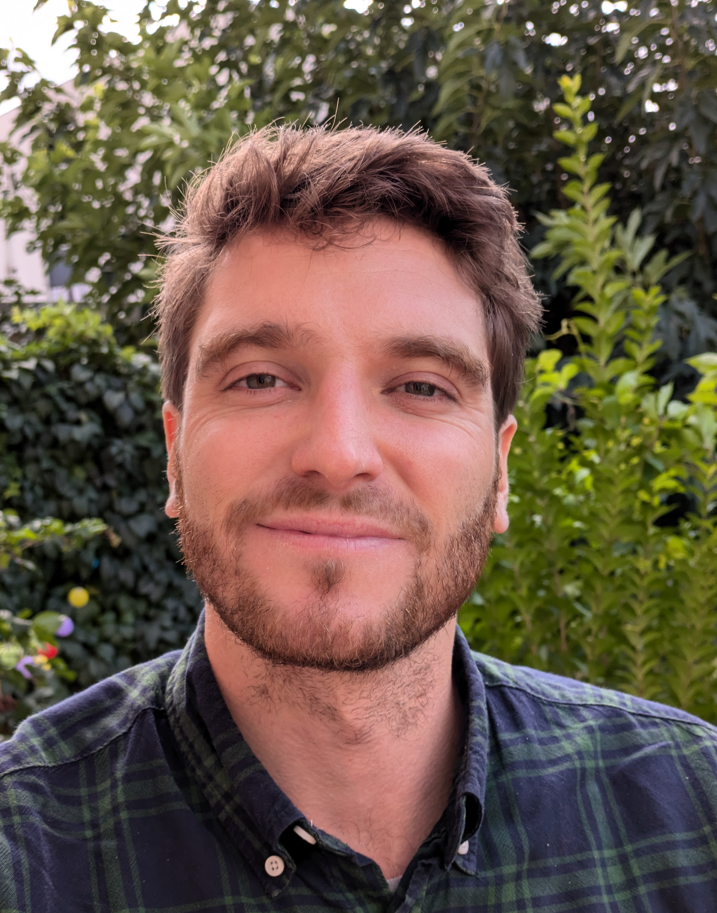
Portrait of Mathieu Delangle

Mathieu Delangle

Associate Professor

Maître de conférences

  • Université Grenoble Alpes, UFR PhITEM
  • G-SCOP Laboratory, CCI team

Biography

My research focuses on human-centred design. It rests on one principle: human activity is a constitutive design criterion, not a constraint checked after the fact. I use immersive environments, motion capture and physiological measurements to observe, simulate and assess this activity from the earliest stages of design, including its perceptual and cognitive dimensions, such as communication, decision-making, mental workload and stress.

My current work is centred on collaborative design in virtual reality: how designers interact in shared virtual environments, and how they can work with AI agents embodied as virtual avatars. It builds on my previous projects on inclusive design, on communication with virtual avatars in speech-language rehabilitation, and on the ergonomic assessment of workstations. All these projects share the same question: how can we take human activity into account early in design, first for an individual user, and now for several people, or people and AI agents, working together?

This cross-disciplinary approach combines engineering design, ergonomics, human-computer interaction and cognitive sciences. It links the development of immersive tools with experimental studies involving end users.

Interests

  • Collaborative Design in Virtual Reality
  • Human Factors and Human-Centred Design
  • Cognition & Perception
  • Universal and Inclusive Design
  • Sustainable Industrial Systems

Education

  • PhD in Mechanical Engineering, 2016 École Centrale de Nantes
  • MSc in Applied Mechanical Sciences, 2012 École Centrale de Nantes
  • BSc in Mechanical Engineering, 2010 University of Caen

Research projects

OngoingG-SCOP Laboratory · Vision-R platform, Grenoble INP - UGA

Collaborative design with embodied AI agents in virtual reality

This exploratory work investigates how an AI agent embodied by a realistic virtual avatar (MetaHuman, Unreal Engine) can act as a partner in a collaborative design task in virtual reality, with low-latency interaction as a central constraint. A first prototype will be developed within a Master’s internship (M1 MOSIG, from January 2027).

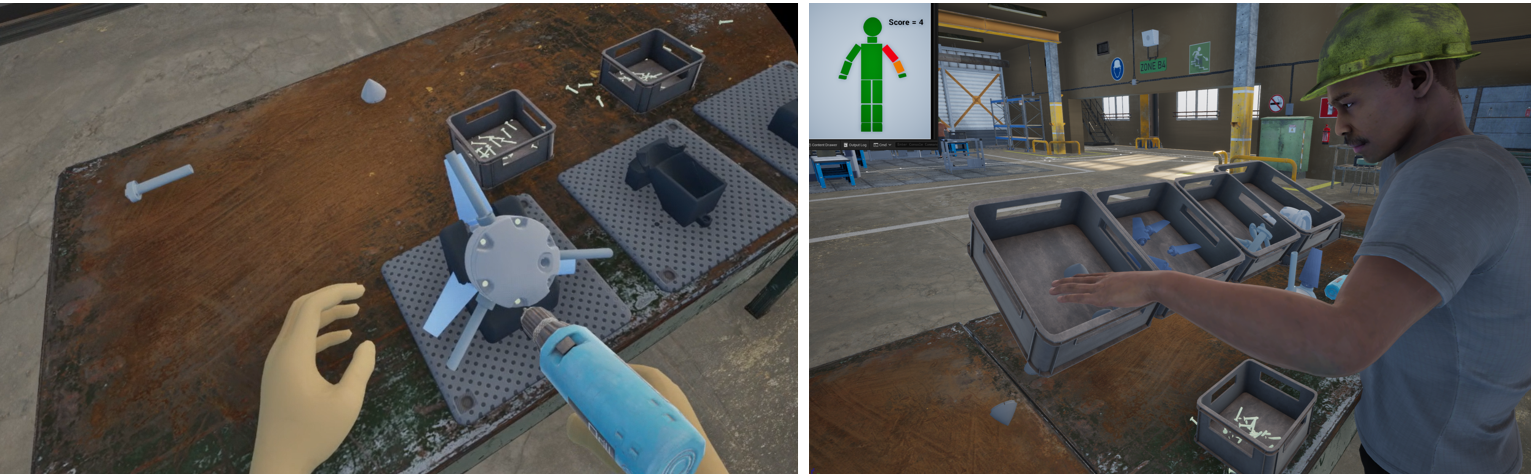
Virtual reality for the ergonomic design of workstations in a circular economy approach

2025 – 2026G-SCOP Laboratory, COSYS team, Grenoble INP - UGA

Virtual reality for the ergonomic design of workstations in a circular economy approach

We investigate how emerging Industry 4.0/5.0 technologies, such as virtual reality, collaborative robotics and artificial intelligence (AI), can be used to design and simulate circular processes (disassembly, remanufacturing, refurbishment) and to test different scenarios virtually before real-world deployment, while integrating operator safety and well-being.

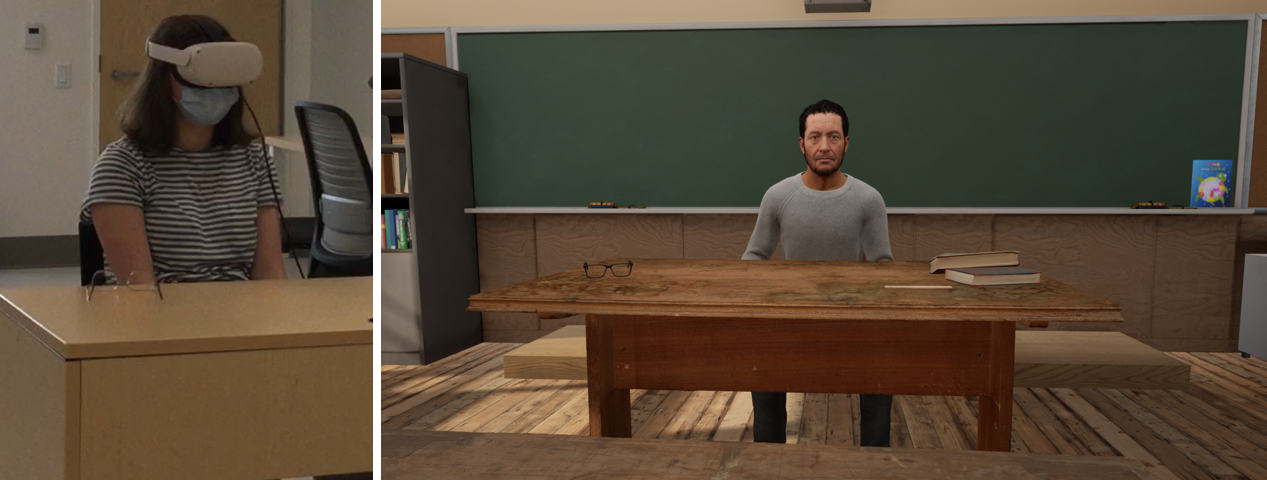
Virtual reality and speech-language rehabilitation

2022 – 2025Université du Québec à Montréal · CHU Sainte-Justine, Montreal, Canada

Virtual reality and speech-language rehabilitation

Design of virtual reality tools to facilitate communication and reduce anxiety in young people facing communication challenges, such as stuttering. The immersive system allows users to interact in real time with a high-quality virtual avatar in a highly realistic environment. The interaction context (virtual environment, sound, atmosphere) and the avatar’s appearance (gender, age, voice) can be modified, and physiological measurements are recorded to objectively assess users’ responses to the different stimuli.

In collaboration with Lucie Ménard (UQAM; Marie Enfant Pediatric Rehabilitation Centre, CHU Sainte-Justine), Anne Moïse-Richard (CHU Sainte-Justine; Université de Montréal), Anne-Lise Leclercq (University of Liège), David Labbé (École de technologie supérieure) and Stéphane Bouchard (Université du Québec en Outaouais).
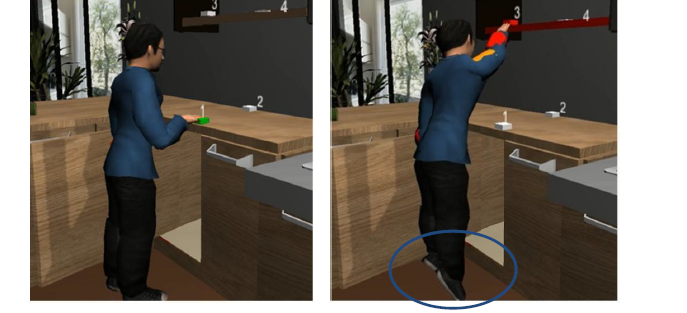
Virtual reality tools for universal design

2012 – 2016LS2N Laboratory, École Centrale de Nantes

Virtual reality tools for universal design

Design of an immersive environment combining digital human models and virtual reality to model users’ morphological and functional characteristics, including specific limitations. Development of a Unity-based tool to simulate different abilities, analyse their impact on activity and support ergonomic co-design, in order to anticipate user needs and design more inclusive environments and workstations from the earliest stages of development.

Supervision

Master’s and research internships

  • 2027 M1 internship (MOSIG, Université Grenoble Alpes): An AI-driven virtual partner for collaborative design in virtual reality.
  • 2026 – 2027 M2 research internship (Industrial Engineering, Grenoble INP - UGA), co-supervised with Guillaume Thomann: follow-up of the HoloMaïa augmented reality system for midwifery training.
  • 2025 – 2026 M1 internship (MOSIG, Université Grenoble Alpes): virtual reality and machine learning for real-time postural assessment in Unreal Engine 5.
  • 2026 Research internship: literature review on virtual reality and human-robot collaboration for circular economy workstations.

Earlier supervision

  • 2012 – 2015 École Centrale de Nantes: two Master’s research projects in virtual reality; three industrial student projects, one of them awarded best student project.

Teaching

Université Grenoble Alpes, UFR PhITEM (since 2026)

  • Bachelor SPI104, Introduction to engineering sciences, mechanical engineering: technical drawing, kinematic modelling.
  • Bachelor GMP201, Introduction to mechanical engineering: solid kinematics, lab sessions, mini-project.
  • Bachelor GMP401, Design and manufacturing technology: calculation, CAD, manufacturing.
  • Master 1 Mechanical Engineering, design project: design methodology through rapid physical prototyping.

Earlier teaching

  • 2025 – 2026 Grenoble INP - UGA, first-year engineering students (34.5 h): technical drawing, analysis and modelling of mechanisms, system kinematics.
  • 2012 – 2015 École Centrale de Nantes, first- and second-year engineering students (212 h): mechanical design, industrial projects, CAD, virtual reality, corporate social responsibility. Course coordinator for two mechanical design units (60 students).

Career

Positions

  • 2026 – Associate Professor (Maître de conférences), Université Grenoble Alpes, UFR PhITEM · G-SCOP Laboratory
  • 2025 – 2026 Postdoctoral researcher, G-SCOP Laboratory, Grenoble INP - UGA
  • 2024 – 2025 Research consultant, Université du Québec à Montréal and CHU Sainte-Justine, Montreal, Canada
  • 2022 – 2024 Postdoctoral researcher, Université du Québec à Montréal, Canada
  • 2012 – 2016 PhD candidate, LS2N Laboratory, École Centrale de Nantes, France. Thesis: Virtual reality tools for universal design

Fellowships

  • 2012 Doctoral fellowship, French Ministry of Higher Education and Research

Publications

11 documents deposited in the open archive HAL, sorted by type and year.

Journal articles 2

Conference papers 7

Posters 1

Theses 1